
Get in Touch with IDA

Horizontal Sand Mill Series
High-Efficiency Horizontal Sand Mill Series
IDA provides top-performing horizontal bead mills to clientele belonging to paint, ink, coatings, and battery materials industries. The proprietary brand wet grinding technology supports nano-level particle size refinements with accuracy and reliability.
20+
Years Experience
50nm
Min. Particle Size
80+
Countries Served
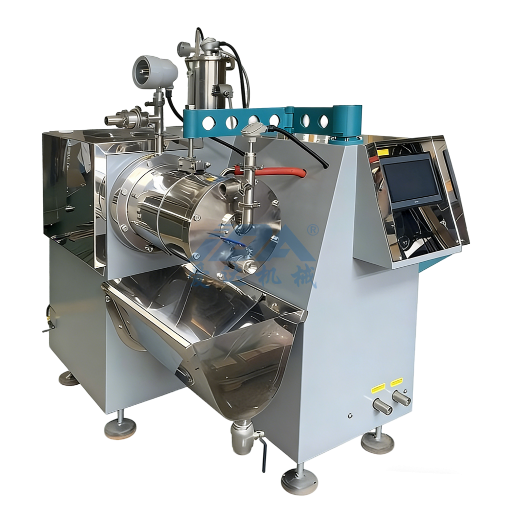
What is a Horizontal Sand Mill? The Ultimate Wet Grinding Solution
A horizontal sand mill (or horizontal bead mill, as it is sometimes called) is very effective wet grinding equipment that continuously offers particle size reduction in the ultra-fine range. In contrast to old-fashioned vertical sand mills, the horizontal bead mill machines that we make have a grinding chamber which is oriented horizontally and this results in an even distribution of grinding media along with high dispersion efficiency.
The operation is based on the grinding media (these can be zirconia beads or glass beads) being agitated at high speed within a closed chamber which is causing creation of intense impact, friction, and shear forces that effectively bring down the size of particles from microns to nanometer levels.
We are a top-ranked sand mill manufacturer in China; thus, we focus on creating and supplying horizontal bead mills for different industries such as paint grinding, ink and coating production, and also for processing lithium battery materials and ceramic slurry.
Nano-level particle size reduction
Continuous production capability
Easy cleaning and color change
Low energy consumption
How Does a Horizontal Bead Mill Work?
It is very important to know the working principle of the bead mill as it would help in optimizing your grinding process and getting the desired particle sizes. Here is a detailed description of how horizontal sand mills perform ultra-fine grinding:
Basic Working Mechanism
The horizontal bead mill uses kinetic energy transfer as the working principle. The procedure is:
1
Material Feed: The pre-mixed slurry is pumped into the grinding chamber at the desired flow rates.
2
High-Speed Agitation: An agitator shaft spins at high speeds (8-15 m/s), producing rapid bead movement.
3
Particle Size Reduction: Grinding beads hit particles with impact and shear forces, reducing their size.
4
Separation: A dynamic separator keeps beads in the chamber while letting finished product pass.
5
Cooling: A water jacket cools generated heat to maintain favorable operating temperatures.
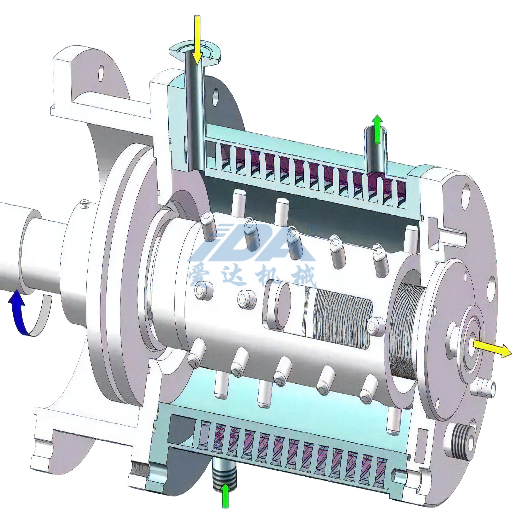
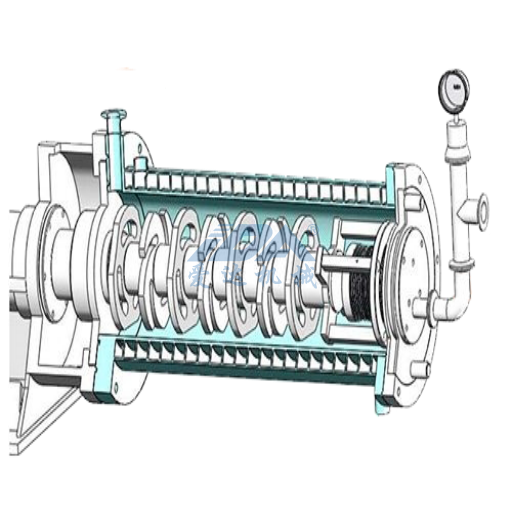
Watch: Working Principle Animation
Key Process Parameters
Properly controlling these parameters will let you obtain the desired particle size distribution:
| Parameter | Impact on Grinding | Typical Range |
|---|---|---|
| Agitator Speed | Higher speed = finer particles, but increases heat | 8-15 m/s |
| Bead Size | Smaller beads = finer product, lower throughput | 0.1-3.0 mm |
| Bead Loading | Higher loading = more grinding contacts | 70-85% vol |
| Flow Rate | Lower flow = longer residence = finer grinding | Application dependent |
| Temperature | High temp can degrade sensitive materials | < 60°C |
Pro Tip:
For nano grinding (< 200nm), use 0.1-0.3mm zirconia beads, multiple passes, and optimized residence time.
Product Lines
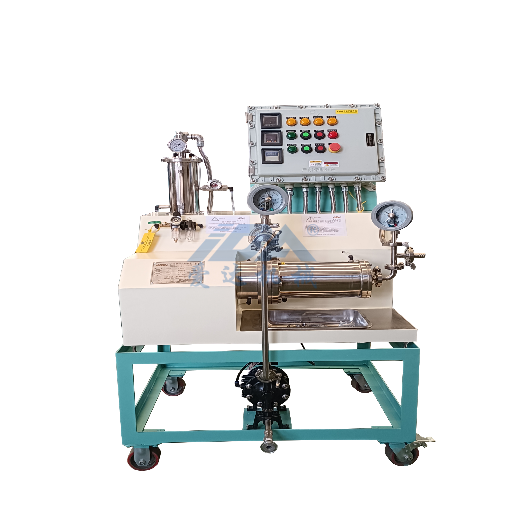
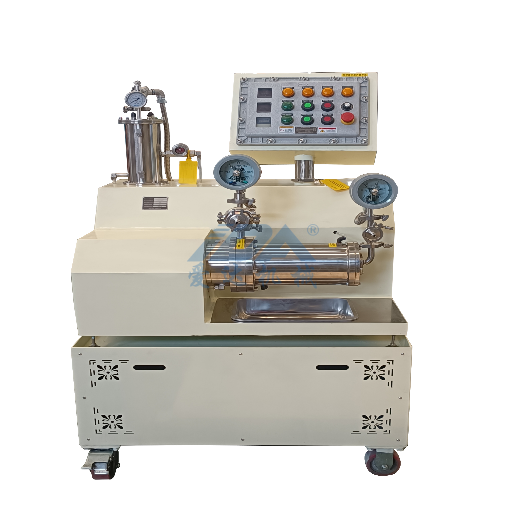
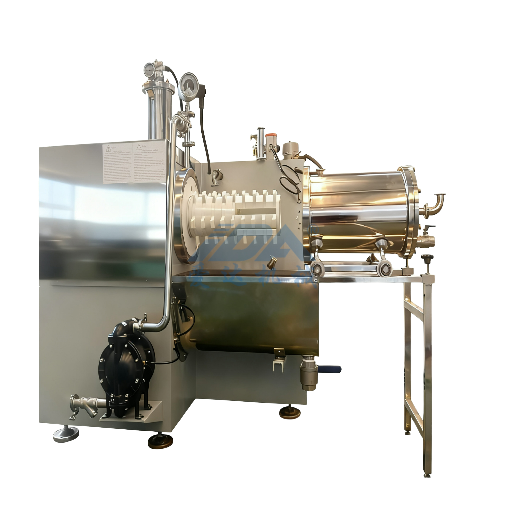
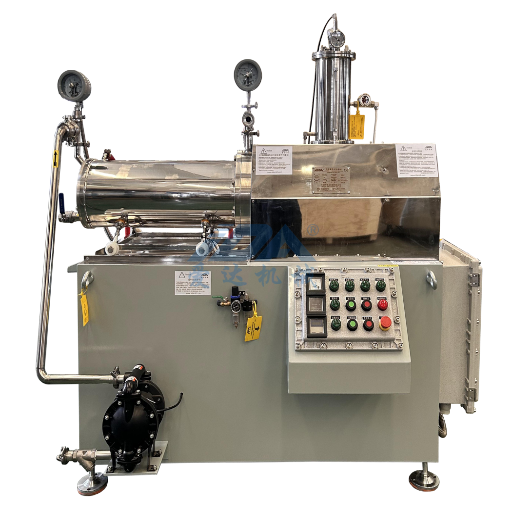
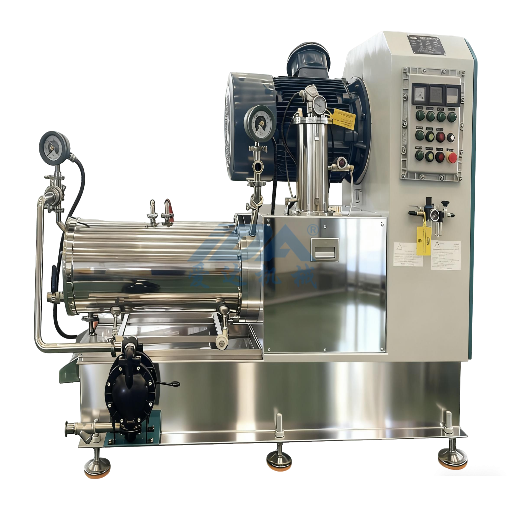
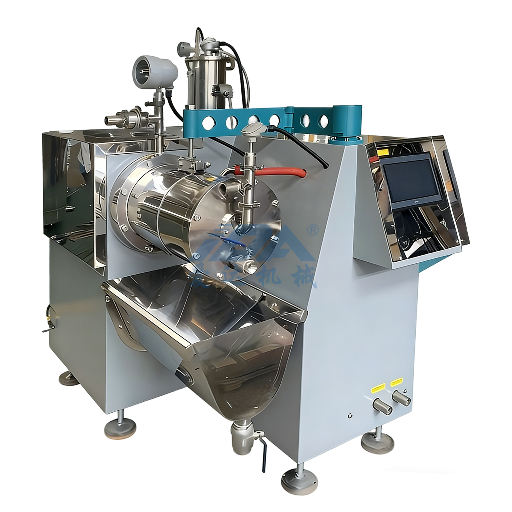
Horizontal Bead Mill & Sand Mill Series
Wet grinding mills designed for precise particle size reduction and pigment dispersion.
0.5L
Lab
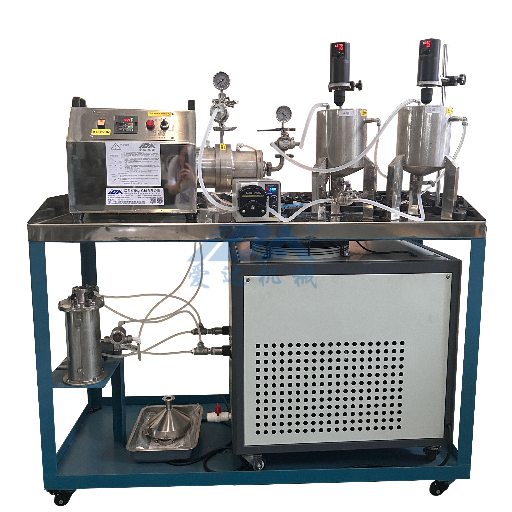
0.5L Dual-circulation Laboratory Sand Mill with Cooling
0.5L
Ex-proof
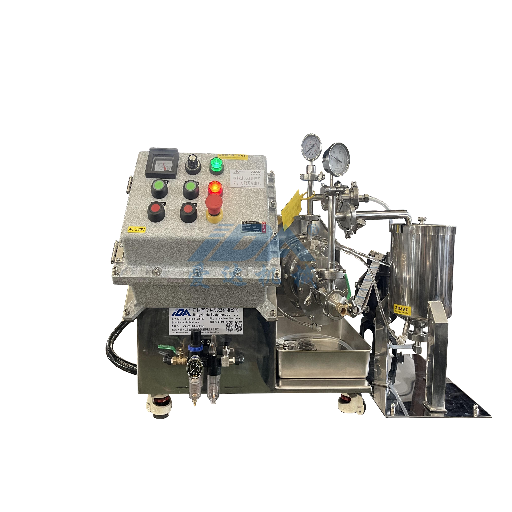
0.5L Explosion-proof Self-circulating Sand Mill
0.5L
Lab
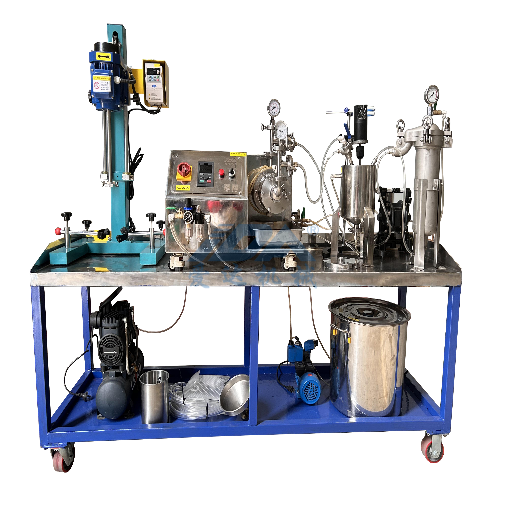
0.5L Grinding Dispersion Stirring & Filtration System
0.5L
Lab
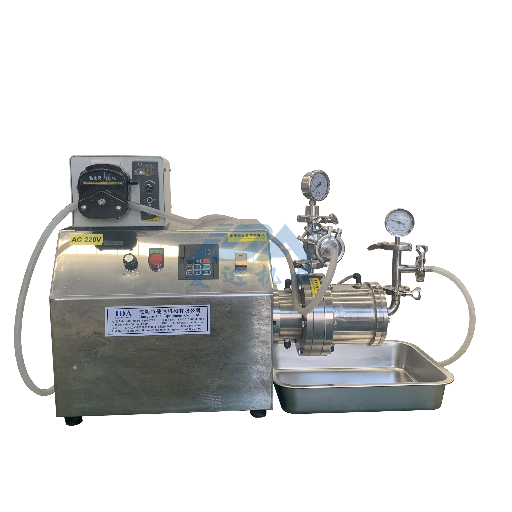
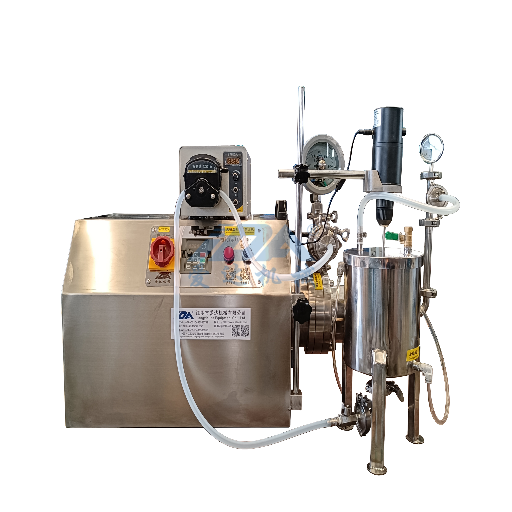
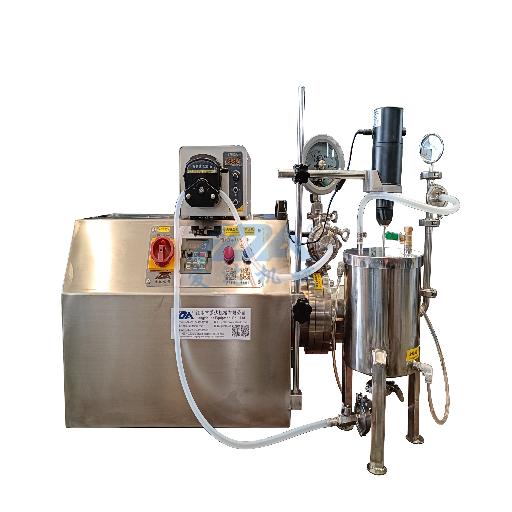
0.5L Laboratory Sand Mill with Peristaltic Pump
0.5L
Lab
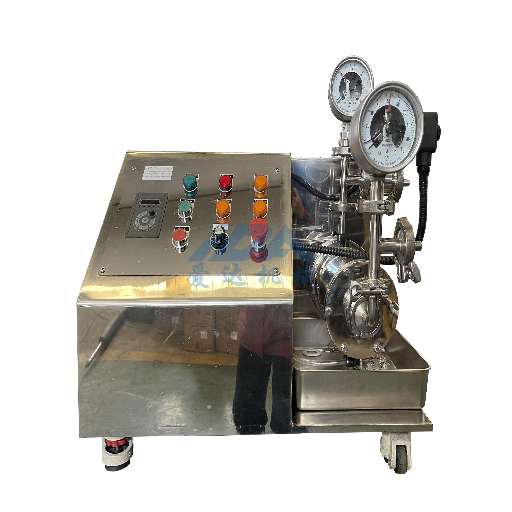
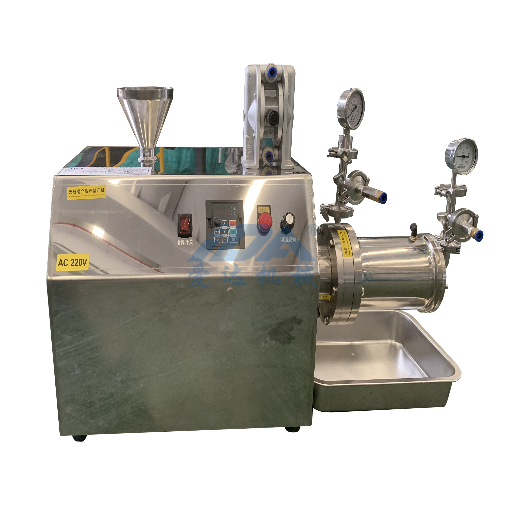
0.5L Laboratory Horizontal Sand Mill
0.5L
Lab
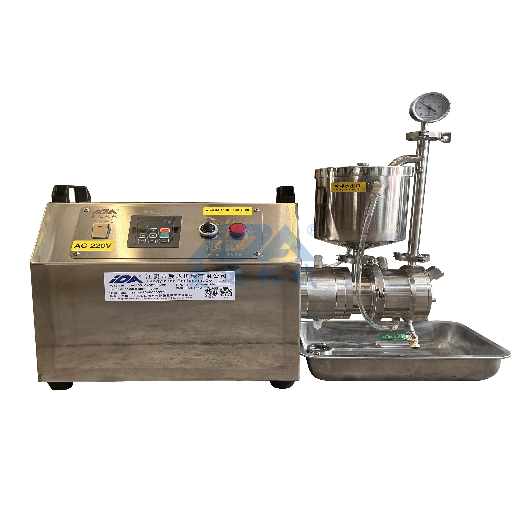
0.5L Self-circulating Laboratory Sand Mill
Grinding Media Calculator
Professional tools to help you select the optimal grinding beads for your horizontal sand mill application
How it works: The optimal grinding bead diameter is typically 20-50× your target particle size (D50). For nano grinding applications, use ratios of 100-200×. Enter your parameters below for a precise recommendation.
μm
Calculation Results
Recommended Size
—
Size Range
—
Bead:Particle Ratio
—
Expert Recommendation
Based on your input parameters…
Pro Tip: For achieving D50 below 500nm, consider using 0.05-0.1mm YSZ beads with a turbo-type mill featuring dynamic separator technology.
Ready to get a customized solution for your grinding application?
Get Instant Quote
Quick Reference: Bead Size by Application
| Application | Target D50 | Recommended Bead Size | Preferred Media |
|---|---|---|---|
| MLCC / Electronic Ceramics | 100 – 300 nm | 0.05 – 0.1 mm | YSZ (Yttria-Stabilized) |
| Li-ion Battery Cathode | 0.5 – 3 μm | 0.1 – 0.3 mm | YSZ (Yttria-Stabilized) |
| Digital / Inkjet Inks | 0.2 – 1 μm | 0.1 – 0.3 mm | CSZ (Cerium-Stabilized) |
| Automotive Coatings | 5 – 15 μm | 0.4 – 0.8 mm | CSZ / Zirconium Silicate |
| Industrial Coatings | 15 – 30 μm | 0.8 – 1.5 mm | Zirconium Silicate |
| Agrochemical SC | 1 – 5 μm | 0.3 – 0.6 mm | CSZ / ZrSiO₄ |
Why it matters: Choosing the right grinding media material affects grinding efficiency, product purity, bead lifespan, and total operating cost. Answer the questions below to find your optimal match.
Recommended Grinding Media
Selection Advice
Based on your requirements…
Need a customized grinding media solution for your application?
Get Instant Quote
📋 Complete Grinding Media Specifications
| Media Type | Density | Hardness | Size Range | Wear Rate | Cost |
|---|---|---|---|---|---|
| Yttria-Stabilized Zirconia (YSZ) | 6.0 g/cm³ | 1250 HV | 0.05 – 2.0 mm | Lowest | $$$$ |
| Cerium-Stabilized Zirconia (CSZ) | 6.0 g/cm³ | 1100 HV | 0.1 – 2.5 mm | Low | $$$ |
| Zirconium Silicate (ZrSiO₄) | 4.0 g/cm³ | 700 HV | 0.4 – 3.0 mm | Medium | $$ |
| Glass Beads (Soda-Lime) | 2.5 g/cm³ | 500 HV | 0.5 – 3.0 mm | High | $ |
| Chrome Steel Beads | 7.8 g/cm³ | 700 HV | 0.8 – 5.0 mm | Medium | $$ |
| Alumina Ceramic (Al₂O₃) | 3.6 g/cm³ | 1500 HV | 0.5 – 3.0 mm | Low | $$ |
Your Challenges, Our Solutions
Common Sand Mill Machine Challenges We Solve
Knowing your production challenges permits us to provide the perfect horizontal sand mill solution tailored to your needs.
Not Achieving Target Particle Size
The existing machinery cannot produce the nano-level fineness that is necessary for high-performance coatings, inks, and battery materials.
Our Solution
By utilizing our turbo nano bead mill with superior rotor design and precise gap separator, we can produce particle sizes as small as 50nm.
High Energy Consumption & Low Efficiency
Grinding time is excessive, power costs are high, and inconsistent output quality is the reason production costs are increasing.
Our Solution
The horizontal sand mill we offer has an optimized length-to-diameter ratio, high bead filling rate (up to 85%), saving 30% of energy consumption.
Difficult Color Change & Long Downtime
Changing product colors necessitates thorough cleaning and thus production delays and wastage of materials.
Our Solution
Dead-corner-free chamber design and quick-release grinding chamber allow coloring in just 15-30 minutes without disassembling the machine.
Metal Contamination Concerns
Grinding equipment that can cause contamination with metal is a no-go for sensitive materials such as battery slurries and electronic ceramics.
Our Solution
We provide a full-ceramic lining option (zirconia rotors, silicon carbide chamber). Our zero metal contact policy guarantees contamination-free grinding.
High-Viscosity Material Processing
Standard grinding machines are not equipped to deal with the thick paste and high-viscosity ink so they cause clogging and uneven dispersion.
Our Solution
With our pin-type horizontal bead mill, we can work with materials up to 50,000 cps. The powerful drive system ensures thick pastes are processed smoothly.
Unreliable After-Sales Support
The previous supplier has bad technical support, slow spare parts delivery, and no proper maintenance guidance.
Our Solution
We offer 24/7 technical support, on-site installation, and rapid spare parts delivery. Engineers with 20+ years of experience provide lifetime consultation.
Why Choose an IDA Sand Mill Machine?
Jiangyin IDA Equipment Co., Ltd. is the go-to company for wet dispersion and grinding techniques. The Horizontal Sand Mill Series is manufactured to be able to take in and process even the world’s most viscous materials while providing the finest quality particle size (D90). It does not matter if you need a small sand mill for R&D or a fully automatic production line for battery slurry, our machines will always be stable and efficient.
0+
Years of Experience
Accumulated knowledge in the field of wet grinding technology since the year 2004
0+
Countries Served
Delivered to customers on all the 6 continents
0+
Machines Delivered
Used by the largest manufacturers all over the world
0/7
Technical Support
All-day, every-day service catering to global clientele
Industry Applications
Wet Industrial Wet Grinding Mill Solutions for All Sectors
Our horizontal bead mills and sand milling machines are fitted for industries that need exact particle size reduction and material dispersion among others.
Paint & Coatings Sector
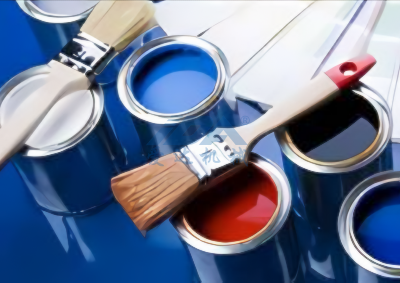
Perfect pigment dispersion for all kinds of paints and coatings that facilitate excellent color and gloss development in the case of automotive, industrial as well as architectural.

Printing Ink Manufacturing
inkgrinding for offset, flexo, gravure and digital printing inks with excellent printability.

Lithium Battery Materials
Precision grinding of cathode materials (LFP, NMC, LCO) as well as anode materials, and battery slurry homogenization.

Pharmaceutical Industry
nano milling of APIs for better bioavailability, suspension, and controlled drug release formulations.

Agrochemical Processing
Grinding according to demand mainly for insecticides SC formulations, herbicides, fungicides, and water-dispersible granules.

Electronic Ceramics / MLCC
Grinding to an ultra-fine degree for MLCC dielectric materials, ceramic ink, and electronic paste production.
Customer Success Stories
Showing Experience, Expertise, Authoritativeness & Trustworthiness in sand and bead mill technology case studies across various industries.
01 Lithium Battery Materials
EV Battery Manufacturer Achieves 99.5% Particle Uniformity with Advanced Bead Mill System
bead mill for lithium battery
cathode material grinding equipment
battery slurry mixing
LFP grinding
Client ProfileLeading EV battery materials manufacturer with 5 production lines
LocationNingde, China (supplying to European automotive OEMs)
ChallengeInconsistent particle size distribution in LFP cathode materials
SolutionCustomized 100L horizontal bead mill with ceramic-lined grinding chamber
EquipmentHSM-100L Horizontal Bead Mill with temperature control system
ResultsD50 reduced from 1.2μm to 0.8μm with 99.5% uniformity
Project Background
Our client, a major lithium iron phosphate (LFP) cathode material supplier, was facing significant quality challenges in their grinding process. Their existing vertical sand mill could not achieve the fine particle size distribution required by their European automotive customers, resulting in inconsistent battery performance and high rejection rates. With the rapid growth of the EV market, they needed a reliable grinding solution that could process 500kg/hour of cathode material while maintaining strict particle size specifications.
Client Challenges
- Inconsistent Particle Sizes: The current facilities yielded D50 values of 1.0 – 1.5μm. Because of the D50 goals of 0.8μm, 15% of the batches had to be rejected.
- Difficulty Controlling Temperature: The grinding process generates an excess of 60 degrees Celsius, leading to material degradation.
- Contamination: Steel processing grinding media generates iron contamination, posing safety hazards.
- Capacity Limitations: The client needed to double their production capacity to meet European demand.
Our Solution
After performing a thorough analysis of the material in our application laboratory, we built a customized HSM-100L horizontal bead mill designed specifically for the grinding of LFP cathode materials. To ensure zero metal contamination, the grinding chamber includes a high-quality ceramic lining (ZrO2) with a high-efficiency cooling jacket. process temperature is kept at below 40 degrees. This is combined with our unique dynamic separator to ensure a more uniform distribution of the particle sizes.
Technical Specifications
| Parameter | Specification |
|---|---|
| Model | HSM-100L Horizontal Bead Mill |
| Grinding Chamber Volume | 100 Liters |
| Chamber Material | ZrO2 Ceramic Lining |
| Grinding Media | 0.3-0.5mm Yttria-Stabilized Zirconia Beads |
| Motor Power | 75KW With Variable Frequency Drive |
| Processing Capacity | 500-600 kg/hour |
| Cooling System | Double-jacket water cooling + chiller unit |
Results and Impact
- Particle Size (D50): 1.2 μm ↓ 0.8 μm (33% ↓)
- Size Distribution: D90/D50: 2.5 ↓ 1.8
- Production Capacity: 300 ↑ 550 kg/hr (83% ↑)
- Batch Rejection: 15% ↓ <2%
- Metal Contamination: 50 ppm ↓ <5 ppm Fe
“The HSM-100L has transformed our cathode material production. The precise and consistent particle size distribution has greatly enhanced the performance of our battery cells, and the quality improvement has made our European customers very happy.”
02 Paint & Coating Industry
Global Paint Manufacturer Increases Production Efficiency by 40% with Nano Bead Mill Technology
Client ProfileTop 10 global paint manufacturer with 12 production facilities worldwide
LocationDüsseldorf, Germany (HQ), deployment in Thailand facility
ChallengeLow grinding efficiency and inconsistent color matching in automotive paint
SolutionNano bead mill system with inline process monitoring
EquipmentHSM-50N Nano Bead Mill with automated CIP system
Results40% efficiency increase, ΔE color difference reduced to < 0.3
Project Background
A leading global paint manufacturer approached us to address persistent quality issues at their Thailand production facility, which supplies automotive OEM customers across Southeast Asia. The current grinding processes were unable to achieve the nano-scale particle sizes necessary for high-end metallic finishes. Additionally, color matching accuracy was inconsistent, and frequent product changeovers resulted in lengthy manual cleaning procedures.
Client Challenges
- Grinding Fineness: Existing equipment produced 200-300nm particles, while <100nm is required for high gloss.
- Inconsistent Color Matching: ΔE > 1.0 resulted in 20% batch adjustment or rejection.
- Long Changeover Times: Changeovers required 4-6 hours of manual cleaning.
- Contamination and Wear: High abrasiveness of metallic pigments caused frequent maintenance.
Technical Specifications
| Parameter | Specification |
|---|---|
| Model | HSM-50N Nano Bead Mill |
| Grinding Chamber Volume | 50 Liters |
| Chamber Lining | Wear-resistant Polyurethane (PU) |
| Grinding Media | 0.1-0.3mm Yttria-Stabilized Zirconia |
| Achievable Particle Size | <50nm (D50) |
| CIP System | Fully automated, 3-stage cleaning cycle |
Results & Impact
- Particle Size: 250nm → 80nm (68% ↓)
- Color Accuracy: ΔE: >1.0 → <0.3
- Production Efficiency: +40% Throughput
- Changeover Time: 5hr → 25min (92% ↓)
- Annual Savings: $1.2M USD
“The nano bead mill has been a game-changer for our automotive paint production. The color consistency now exceeds our most demanding OEM customer requirements, and the automated CIP system has dramatically improved our production flexibility.”
03 Agrochemical / Pesticide
Agrochemical Company Achieves Stable SC Formulations with Advanced Wet Grinding Technology
pesticide bead mill
SC formulation grinding
agrochemical wet grinding
herbicide grinding equipment
Client ProfileRegional agrochemical manufacturer specializing in herbicide and fungicide SC formulations
LocationSao Paulo, Brazil
ChallengeUnstable SC formulations with settling and caking issues
SolutionHigh-Shear Bead Mill with Explosion-Proof Design
EquipmentHSM-30SC Agrochemical Bead Mill (ATEX Certified)
ResultsShelf stability increased from 6 months to 24 months and attained a 95% suspension rate.
Project Background
Our customer is a Brazilian agrochemical company with a robust presence in South America. They encountered deficiencies in quality regarding suspension concentrate (SC) formulations. Poor size distribution led to rapid settling and hard-pack caking, resulting in product returns and application failures. Production involved organic solvents, necessitating explosion-proof equipment.
Technical Specifications
| Parameter | Specification |
|---|---|
| Model | HSM-30SC Agrochemical Bead Mill |
| Explosion Protection | ATEX/IECEx Zone 1 (II 2G Ex d IIB T4) |
| Inerting System | Automatic nitrogen blanketing |
| Grinding Media | 0.5-0.8mm zirconium silicate beads |
| Certifications | ATEX, IECEx, INMETRO (Brazil) |
Results & Impact
- Particle Size (D90): >10μm → <3μm
- Suspension Rate: 70% → 95%
- Shelf Stability: 6mo → 24+ months
- Product Returns: 25% → <2%
- Production Capacity: +60% Increase
“The quality improvement in our SC formulations has been remarkable. Our products now maintain stable suspension even after two years of storage, and we have virtually eliminated product returns. The explosion-proof design gives us peace of mind.”
Horizontal Sand Mill Series FAQs
Horizontal sand mills are actually a type of "bead-mill" or grinding machine. It has been formulated to perform wet grinding and dispersion within the grinding chamber, which is positioned on a horizontal plane. Its horizontal orientation often leads to better control over the circulation of grinding media in contrast to the vertical sand mill. For this reason, the horizontal design often produces larger grinding efficiencies and greater ease for the mechanical seal and grinding bead retention. For continuous running machines due to grinding liquid and significantly increased production, horizontal sand mills have found a large application in the coatings, inks, and pharmaceutical industries.
Horizontal bead mills grind by circulating grinding media (beads) in the grinding cylinder, where shear and collision forces reduce particle size and improve dispersion. For high viscosity materials such as paint coatings, the mill machine uses high energy density and tailored flow screen sieve discharging horizontal designs to maintain grinding efficiency and prevent overload. A high-speed disperser is often used upstream to pre-disperse the batch before wet grinding in the horizontal sand mill fsp60 or similar sand grinding mill models.
Grinding media, cutting media, or grinding beads are indispensable in a mill to achieve proper operations in terms of dispersion and grinding efficiency. The size of glass/ceramic beads, space for air, grinding media density, and mechanical stress are several factors determining collision energy. Each factor will eventually affect the particle size reduction and increase your choice of fineness. In really high-energy nano or ultrafine dispersion, opt for small beads (thus high surface area) to achieve higher fineness while maintaining flow at an appropriate speed within the grinding chamber for the grinding media to disperse assistance. Selection of appropriate grinding mill and grinding media ensures that grinding media will maximize the efficiency of the grinding process while minimizing the pollution occurring from wear of beads.
It is correct that any of the wet grinding machines and bead mill machines may be prudently adapted for such sensitive materials as pharmaceutical components or magnetic recording materials by choosing the appropriate grinding media or using a closed system to elude contamination. The conditions with which the instruments must act should therefore be kept under mild shear. Manufacturers can offer grinding and dispersion solutions that are tailored to grinding and maintaining chemical integrity for those materials, but no industrial information can be disclosed.
Key variables comprise bead size and loading, rotor/stator speed, flow rate across the grinding chamber, equipment type, which may be either the grinding disc or the grounded pin, and temperature control of the mill. High flow screen sieve designs and a continuous production machine for grinding can boost production efficiency. Optimizing these parameters increases the occurrence of collision frequency, shear, and high energy by concentration in a highly efficient grinding cylinder that can deliver constant particle size fineness throughout the grinding process.
High-rate product recovery, low maintenance, and quick clean-out make the flexible Design BM horizontal media mill better suited to steady multi-runs. Couple that with a quick lob maintenance-free drive and less maintenance, and a small footprint owing to its low height, while a heavy-duty disc bearing [link to/from Fig. 2] provides mechanical limitation for longer run times. The mill is extremely suited to the narrow grinding particle distribution range that delivers an excellent finish in the drink, paint, and inks industries.
The regular inspection and replacement of the grinding beads while watching the wear of the grinding disc or grinding cylinder, and checking the mechanical seal for leakages are essential servicing points. Cleaning the flow sieve discharging components should also not be ruled out. Closed-loop systems and careful filtration are used to control pollution and subsequent bead wear. This means that the regular cleaning-process is achieved through maintenance. Such maintenance that is performed under controlled conditions is invaluable to the life-extension of the machine; this cannot be overemphasized, as it will result in better performance leads. The process will benefit when applied to high-viscosity formulations while featuring more efficient grinding techniques.
Horizontal sand mill suppliers, such as so-and-so, offer models for horizontal sand milling with the unique features of a quick discharge screen, which can be customized to customize the grinding chamber and for continuous options. These mills have high-spot high grinding efficiency, heavy-duty sand grinding, and can be altered to perform like wet process milling equipment in coatings and inks, pharmacy drugs, and magnetic recording materials.
The target particle size and bisection, material viscosity, required production efficiency, grinding media type and size, and whether the operation is continuous or batch can be considered. Options in the selection include horizontal sand mill fsp60, halo-style design with horizontal bead mills, pin-type bead mill, or basket mill configuration. Moreover, let us investigate the manufacturer support, spare parts availability, and process controls for dispersion and grinding for effective wet grinding.