Get in Touch with IDA
IDA Equipment — Chemical Reactor Manufacturer & Supplier
Complete Multi-Shaft Reactor Systems from 50 L to 2 000 L
Established in 2005, IDA Equipment has expanded from building simple dispersers to manufacturing complete multi-shaft chemical reactor systems ranging from 50L to 2000L. The company has adopted cutting-edge German technology and, in collaboration with universities, has developed a global clientele in the petrochemical and specialty chemicals sector. We handle everything from design, and research & development to production, and after-sales service, for products such as paints, battery materials, inks, and adhesives.
15+
Countries Served
7
Reactor Models
12
Utility Patents

Types of Chemical Reactors: QLF Series Multi-Shaft Reactor Vessels
Dual-Action Reactor Design — 50 L to 2 000 L
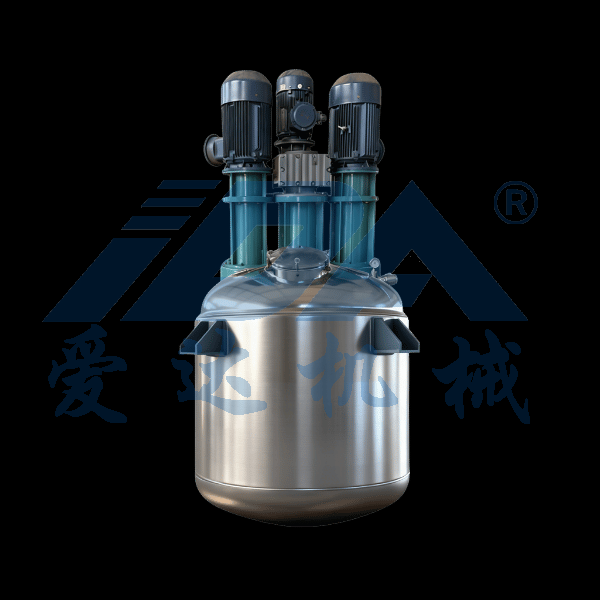
The QLF series isn’t a single machine — it’s a family of reactor vessels scaled from lab-bench prototyping (50L) all the way up to full production capacity (2000L). Every unit pairs a high-speed dispersion shaft with one or two low-speed mixing shafts inside a jacketed vessel body. That dual-action design matters because a lot of reactions need both intense local shearing and gentle bulk circulation at the same time. Try getting that from a standard single-agitator vessel. Doesn’t work well.
Lab Scale
QLF50 Reactor
50L · 2.2 kW Dispersion · 0–2880 rpm
Lab and pilot scale. Perfect for small-batch R&D runs where you need to nail down formulation before scaling up. Mixing at 0–85 rpm and 0–350 rpm secondary.
Pilot Scale
QLF100 Reactor
100L · 3 kW Dispersion · 0–2880 rpm
Slightly larger pilot unit. Steps up dispersion power to 3 kW while keeping the same speed range. Good middle ground between testing and small production.
Production
QLF200 Reactor
200L · 7.5 kW Dispersion · 0–1450 rpm
First real production-scale model. The jump to 7.5 kW dispersion handles higher-viscosity slurries — battery electrode pastes, thick adhesive formulations, that kind of thing.
Mid-Range
QLF500 Reactor
500L · 18.5 kW Dispersion · 0–1450 rpm
Mid-range workhorse. 18.5 kW dispersion paired with 11 kW dual mixing shafts. Handles most chemical processing volumes for specialty chemical production.
Full Production
QLF1000 Reactor
1000L · 37 kW Dispersion · 0–1450 rpm
Full production capacity with 37 kW dispersion. Mixing shafts at 22 kW each. Designed for continuous or semi-batch operation in paint, coating, and ink plants.
Heavy Duty
QLF1500 Reactor
1500L · 55 kW Dispersion · 0–960 rpm
Heavy-duty unit. Lower dispersion speed (0–960 rpm) but much higher torque for ultra-thick materials. 37 kW mixing shafts keep the bulk moving.

Flagship Model
QLF2000 Reactor
2000L · 75 kW Dispersion · 0–960 rpm · 45 kW Dual Mixing
The big one. 75 kW dispersion motor, 45 kW on each mixing shaft. Built for large-volume batch reactor operations — petrochemical intermediates, industrial adhesive production, and high-throughput battery slurry mixing. If your process needs more than 2000L, we do custom builds.
75 kW
Dispersion
45 kW
Each Mix Shaft
2000 L
Max Volume
Need more than 2 000 L? — We do custom builds. Contact our engineering team to discuss your process requirements.
Contact Us
Contact Us
Technical Specifications — Reactor Capacity & Power Data
Full Spec Breakdown for the QLF Series
Here’s the full spec breakdown for the QLF series. All power ratings are at the motor shaft — actual tip speeds and torque depend on your blade configuration and vessel geometry. We size the disperser disc and mixing paddles to match your specific material, so these numbers are starting points, not limits.
| Model | Volume(L) | Dispersion Power(kW) | Dispersion Speed(rpm) | Mixing Shaft 1(kW) | Mix Speed 1(rpm) | Mixing Shaft 2(kW) | Mix Speed 2(rpm) |
|---|---|---|---|---|---|---|---|
| QLF50 | 50 | 2.2 | 0–2,880 | 1.5 | 0–85 | 2.2 | 0–350 |
| QLF100 | 100 | 3.0 | 0–2,880 | 2.2 | 0–85 | 2.2 | 0–350 |
| QLF200 | 200 | 7.5 | 0–1,450 | 4.0 | 0–85 | 4.0 | 0–350 |
| QLF500 | 500 | 18.5 | 0–1,450 | 11.0 | 0–61 | 11.0 | 0–250 |
| QLF1000 | 1,000 | 37.0 | 0–1,450 | 22.0 | 0–52 | 22.0 | 0–200 |
| QLF1500 | 1,500 | 55.0 | 0–960 | 37.0 | 0–41 | 37.0 | 0–160 |
| QLF2000 | 2,000 | 75.0 | 0–960 | 45.0 | 0–41 | 45.0 | 0–160 |
Note: All models use variable-frequency drive (VFD) for stepless speed control. Jacketed vessel body standard on 200L and above. Gas-tight seals available for volatile reactant handling. Vessel material: SS304 standard, SS316L and Hastelloy available on request. Mechanical seal standard; magnetic coupling available for hazardous service.
Wholesale Reactor Supply & OEM Services
OEM · ODM · Bulk Orders · Global Export
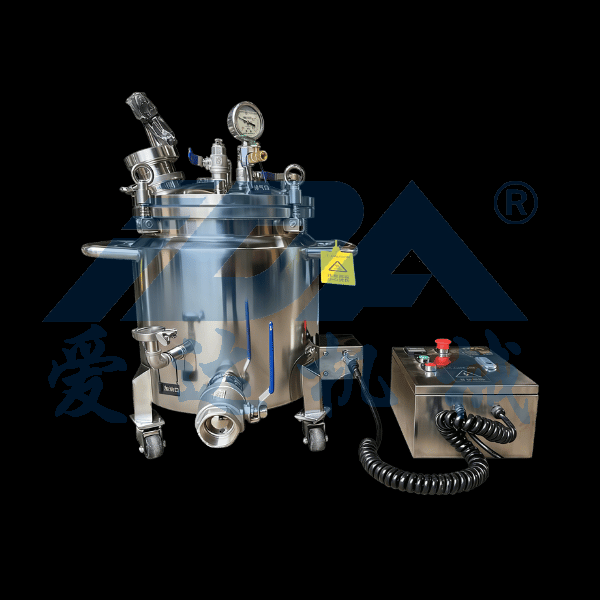
If you’re sourcing reactor vessels in volume — whether for a new production line, a fleet replacement, or resale under your own brand — we do both OEM and ODM.
OEM / ODM
Custom branding, modified designs, private label
Bulk Pricing
Volume discounts on fleet orders of 3+ units
Global Shipping
FOB / CIF to US, Europe, Southeast Asia, Middle East
After-Sales
On-site commissioning, spare parts supply, tech support
Lead times: standard models 4–6 weeks, custom builds 8–14 weeks. We handle export packaging, container loading, and can arrange freight forwarding. Payment terms are negotiable for repeat wholesale buyers — talk to our export team.
Need a Volume Quote?
Tell us your capacity requirements, material specs, and quantities. We’ll get back to you within 24 hours.
Product Gallery
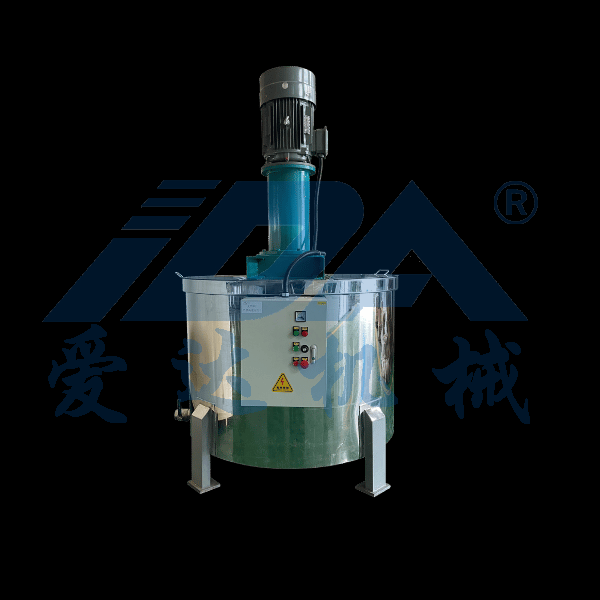
Chemical Reactor Series Images
From 50L lab-scale to 2000L full production — built for paints, battery slurries, inks, adhesives, and specialty chemical processes.


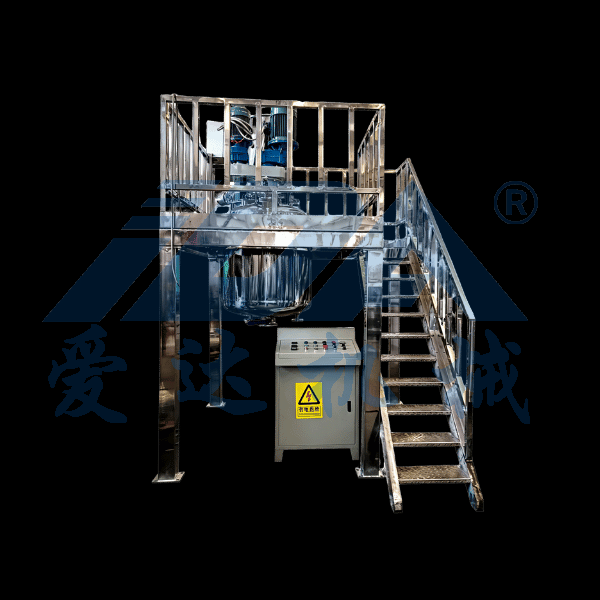
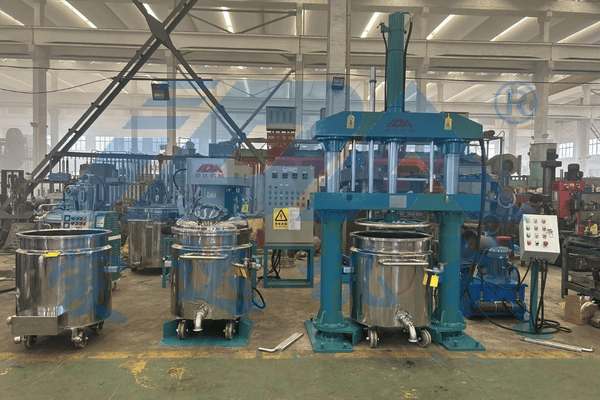
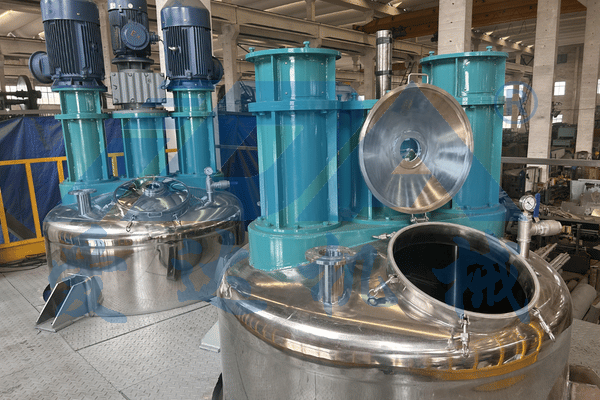
Advanced Manufacturing Facility
Take a look inside our state-of-the-art production base where precision meets industrial scale.



×
![Zoomed View]()
Comparison Tool
Batch Reactor vs CSTR — Which Do You Need?
Compare the two most common reactor types across key performance dimensions. Click a category to explore details.
Case Studies
Real Results from Real Production Lines
How IDA QLF multi-shaft chemical reactors solved mixing, heat transfer, and scale-up problems across four different industries.
Battery Cathode Mixing Line — From 12% Rejection to Under 3%
12% → 3%
Rejection Rate
±8% → ±2%
Batch Consistency
QLF1000
Reactor Model
A lithium battery materials plant in Guangdong Province was running NMC cathode slurry through a standard anchor-type batch reactor. The slurry kept separating near the vessel walls — dead zones where the agitator just couldn't reach. Batch rejection rate was hovering around 12%.
chemical reactor
batch reactor
reaction rate
Exothermic Adhesive Reaction — Taming a 15°C Temperature Spike
15°C → 3°C
Temp Excursion
QLF500
Reactor Model
Zero
Off-spec Since
This one was educational. A specialty adhesive producer in Vietnam had a 500L reactor from another supplier. During their epoxy crosslinking step, the jacket couldn't pull heat fast enough. Temperature spiked 15°C above setpoint every batch. Side reactions. Off-spec product. The works.
exothermic
heat transfer
chemical reaction
Ink Color Changeover — 4 Hours Down to 45 Minutes
4h → 45min
Changeover Time
Ra ≤ 0.4µm
Surface Finish
QLF200
Reactor Model
A printing ink company in Busan was running six different pigment dispersions through two reactors. Color changeover between batches? Four-plus hours of cleaning. Every time.
batch reactor
chemical process
reactant
Nanomaterial Scale-Up — 50L to 1000L Without Losing Particle Distribution
50L → 1000L
Scale-Up Range
±5%
Distribution Match
4 Months
Total Timeline
A graphene dispersion startup (one of our university collaboration partners) needed to go from a 50L pilot reactor to 1000L production without losing particle size distribution. Most equipment vendors told them to just buy the big unit and figure it out. That's... not how it works.
reactor vessel
residence time
catalytic
Discuss Your Application With Us →
We'll recommend the right reactor model based on your process requirements.
Frequently Asked Questions
Everything you need to know about IDA QLF chemical reactors — specifications, customization, heat transfer, certifications, and delivery.
The QLF series covers multi-shaft reactor vessels from 50L to 2000L. These are batch reactors with a twist — they combine high-speed dispersion (up to 2880 rpm on smaller units) with low-speed mixing in the same vessel. Jacketed for heating and cooling. We also do custom configurations: different agitator types, materials of construction from SS304 through Hastelloy, and control system integration. So it's not one type — it's a platform you can configure for your specific process. On a side note, if you're looking at tubular reactor or packed bed reactor configurations for gas-phase or catalytic work, those fall outside our QLF line, but we can point you to partners who handle plug flow and fixed bed designs.
A batch reactor processes in discrete loads. You charge raw materials, run the reaction, then discharge. A CSTR — continuous stirred tank reactor — keeps a steady flow of reactant going in and product coming out. The choice comes down to your production volume and how the reaction behaves. Low-volume, multi-product plants? Batch makes sense. High-volume, single-product lines where throughput matters? CSTR.
Yes — and honestly, about 80% of our orders involve some level of customization. Common modifications include changing the vessel material (SS316L for corrosive reagent exposure, Hastelloy for acid service), adjusting jacket pressure ratings, swapping agitator blade geometry for specific flow patterns, or adding features like CIP nozzles, sight glasses, or sample ports. Tell us about your application — temperature range, viscosity, whether it involves a solid catalyst bed or purely liquid-phase work, what certifications you need — and we'll propose a configuration.
The basic equation is A = Q / (U × ΔTlm). Q is your heat duty (watts), U is the overall heat transfer coefficient — typically 200–400 W/m²K for jacketed stainless steel vessels, depending on the fluids — and ΔTlm is the log mean temperature difference between your jacket fluid and the reactor contents. The jacket essentially acts as an integrated heat exchanger wrapped around the vessel body. We've got a calculator tool on this page that does this for you. But if you're dealing with a particularly tricky reaction where thermal management is critical, send us the data and we'll run the analysis ourselves.
CE and ISO as standard. Our vessels are designed to meet ASME Section VIII Division 1 for pressure vessel applications. For pharmaceutical customers, we follow GMP fabrication practices — electropolished surfaces, documented weld procedures, material traceability. PED and ATEX certifications are available on request for European installations. The documentation package includes material certificates, weld maps, hydrostatic test reports, and dimensional inspection records.
Standard QLF models ship in 4–6 weeks from order confirmation. Custom builds run 8–14 weeks — it depends on the size and how many modifications we're making. And yes, we ship worldwide. Products have gone to the US, South Korea, South Africa, Vietnam, Malaysia, India, Russia, Japan, Thailand, the Netherlands, Australia, and more. We handle export crating, container loading, and can arrange door-to-door freight if needed.