Get in Touch with IDA

Hydraulic Discharge Machine: The Essential Device for Efficient Discharge

Contents
show
The hydraulic discharge machine functions as the mainstay equipment for industrial operations because it has been developed to handle fluid discharge through various industrial applications. The machines establish their reputation for accuracy and dependable operationability at construction sites and manufacturing facilities by showing their capacity to operate under demanding performance requirements. This extensive guide provides essential knowledge for industry professionals who want to improve their equipment performance and for decision-makers who want to assess the financial value of hydraulic discharge machines.
Understanding the Hydraulic Discharge Machine

What is a Hydraulic Discharge Machine?
A hydraulic discharge machine (HDM) serves as an advanced industrial equipment system which uses hydraulic techniques to manage material movement throughout their operational processes. These machines operate with pressurized hydraulic fluids to deliver accurate and effective performance across manufacturing, construction, and maintenance work environments.
Core System Components
- Hydraulic pump for pressure generation
- Control valves for flow management
- Actuators for mechanical force conversion
- Reservoir system for fluid storage and circulation
The system generates output which operators use to complete pipeline cleaning and tank emptying and high-pressure material cutting tasks. Modern hydraulic discharge machines use advanced control systems which enable operators to customize their pressure and flow rate and operational settings according to their specific application requirements. HDMs have become essential equipment for operations that need to achieve both efficient energy consumption and minimal work interruptions for their operation requirements.
Key Components of a Hydraulic Discharge Machine
The Hydraulic Discharge Machine (HDM) uses multiple essential components which execute specific tasks to enhance its overall system performance and accurate operation. Below are the primary components and their roles:
| Component | Function | Key Features |
|---|---|---|
| Hydraulic Power Unit (HPU) | Generates and regulates hydraulic pressure | Motor, pump, reservoir, filtration systems |
| Control Valves | Manages fluid flow and direction | Adjustable pressure and flow control |
| High-Pressure Discharge Nozzle | Facilitates precise fluid ejection | Hardened steel construction for durability |
| Instrumentation & Monitoring | Monitors system parameters | Advanced sensors, control interfaces |
| Hydraulic Hoses & Connectors | Channels fluid throughout system | Reinforced for high-pressure resistance |
| Safety Mechanisms | Safeguards against equipment failure | Pressure relief valves, emergency shut-off |
The components of the HDM system demonstrate how hydraulic technology enables the system to deliver excellent performance within industrial environments. The manufacturers build these machines with high-precision elements and strong construction methods to fulfill the challenging operational needs of contemporary work settings.
How Hydraulic Discharge Works
The process of hydraulic discharge involves systems which release high-pressure fluid from their containers to transform hydraulic energy into mechanical work. A hydraulic pump starts the operation by extracting liquid from the reservoir while it compresses the liquid until it reaches the pressure level needed for system operation. The system distributes the pressurized liquid through valves and hoses and actuators to execute mechanical operations which include lifting and pushing and rotating functions.
Modern Design Innovations
Proportional Control Valves
Advanced sensors for real-time monitoring and adjustment
CFD Software Integration
Optimizes fluid flow to prevent turbulence and cavitation
Energy Efficiency
Minimizes energy consumption while maintaining performance
The latest indexed data shows that current research efforts focus on building hydraulic systems which offer precise flow control while minimizing energy consumption. The new developments enable hydraulic systems to function effectively in complex industrial settings while maintaining both operational dependability and economical safety features.
Applications of Hydraulic Discharge Machines
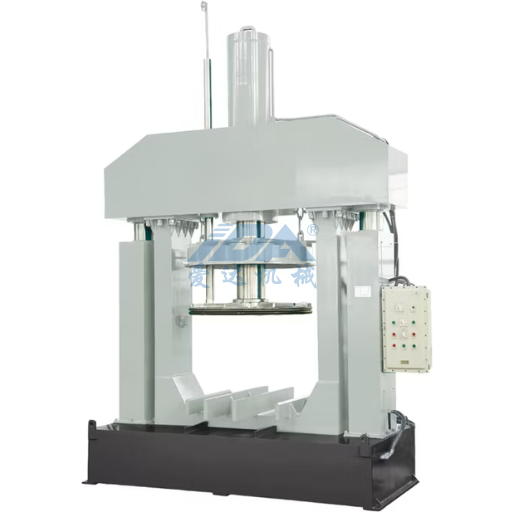
Use in Heavy Manufacturing
Hydraulic discharge machines operate as vital components in heavy manufacturing because they enable precise management of high-pressure fluid systems which manufacturing processes like metal cutting and metal forming and machining operations require. The systems achieve their production targets through automated technology which works with CNC (Computer Numerical Control) systems to deliver precise and efficient manufacturing results.
Aerospace
Large component manufacturing with consistent performance under extreme conditions
Shipbuilding
Heavy-duty operations requiring sustained high-pressure performance
Automotive Production
Precision manufacturing with automated CNC integration
Technology Advancement
Current search trends demonstrate that recent advancements have created a new priority for energy-efficient hydraulic systems which feature IoT-based performance monitoring capabilities that deliver real-time data about system status to increase operational efficiency and decrease system downtime.
Waste Management Solutions
Sustainable waste management systems exist as essential components which enable businesses to meet environmental regulations while achieving their operational goals. A review of the latest data from search engine trends highlights significant interest in technologies that prioritize waste reduction, recycling, and resource recovery.
| Technology | Function | Benefits |
|---|---|---|
| Smart Waste Bins | Sensor-based fill level tracking | Optimized collection schedules |
| Automated MRFs | AI-based waste sorting | Accurate material recovery |
| Waste-to-Energy | Converts non-recyclable waste | Energy resource generation |
| IoT Monitoring | Real-time system tracking | Enhanced operational efficiency |
The new technologies provide businesses with solutions which not only meet rising consumer and regulatory demands but also assist organizations in achieving their long-term monetary benefits and improved resource management.
Role in Food Processing
Waste management technology advancements create essential solutions which assist modern food processing systems to obtain better operational efficiency and sustainability performance. Food manufacturers achieve better operational results by using real-time data analytics and predictive algorithms to control their resource use and waste production.
Food Processing Optimization Technologies
- Automated Sensors & IoT Devices: Track production lines to identify unnecessary material disposal and equipment failures
- Waste-to-Energy Technologies: Convert organic waste into bioenergy, reducing fossil fuel dependence
- Anaerobic Digestion Systems: Transform waste into biogas and nutrient-rich fertilizers
- Circular Economy Models: Focus on reusing byproducts to create operational savings
The search data indicates that people show rising interest in eco-friendly food processing methods which include both anaerobic digestion and composting systems that convert waste into useful resources. The industry shows a strong preference for circular economy models which focus on reusing byproducts to create operational savings and decrease environmental damage.
Performance Features of Hydraulic Discharge Machines
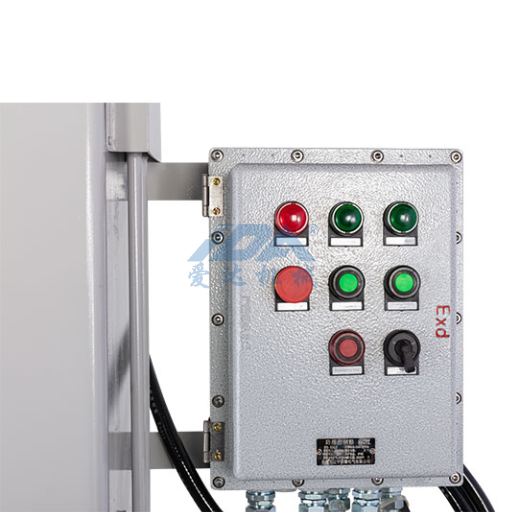
High-Pressure Performance Advantages
High-pressure hydraulic discharge machines provide multiple benefits which improve both their operational efficiency and system reliability. The systems use advanced engineering techniques to deliver maximum force output which maintains precise performance capabilities across multiple industrial use cases.
Key Performance Benefits
Energy Efficiency
Major reductions in energy usage through advanced engineering
System Reliability
Advanced sealing and corrosion-resistant materials
Modular Design
Effective maintenance operations for budget-friendly solutions
The most recent data analysis shows that businesses which adopt high-pressure systems experience major drops in both energy usage and operational halts. High-pressure hydraulic technology serves as a vital component which supports sustainable development in modern industrial processes.
Versatility of Automated Discharge Systems
Automated discharge systems demonstrate exceptional adaptability because they combine sophisticated control algorithms with tailored system designs and support for multiple industrial applications. The systems operate with high precision to process various types of materials which include granular solids and liquids and semi-viscous substances.
System Capabilities
Material Processing:
Granular solids, liquids, semi-viscous substances
Granular solids, liquids, semi-viscous substances
Control Features:
Programmable cycles with real-time monitoring
Programmable cycles with real-time monitoring
Industry Applications:
Food processing, pharmaceuticals, chemical manufacturing
Food processing, pharmaceuticals, chemical manufacturing
Adaptability:
Adjusts to changing input conditions automatically
Adjusts to changing input conditions automatically
Enterprises are searching for solutions which decrease their operational downtime while maintaining consistent output quality according to current search engine trend analysis. The system demonstrates multiple functions which enable its use in different sectors to achieve better operational performance and increased production capacity.
Economic Benefits of High-Efficiency Models
Business operations become more economical when high-efficiency models lower their expenses while increasing their resource efficiency. Industries which adopt these models achieve energy reductions between 20 to 30 percent according to recent data because the technology includes sophisticated energy management systems.
| Economic Benefit | Impact Range | Contributing Factors |
|---|---|---|
| Energy Reduction | 20-30% | Advanced energy management systems |
| Downtime Reduction | Significant decrease | Predictive maintenance systems |
| ROI Timeline | 12-18 months | Reduced operational expenses |
| Environmental Compliance | Enhanced | Decreased emissions |
High-efficiency models enable businesses to match production needs through their adaptable design which requires minimal financial commitment. The economic benefits of these solutions together with their ability to meet environmental regulations make them essential for sustainable industrial operations.
Maintenance and Care for Hydraulic Discharge Machines
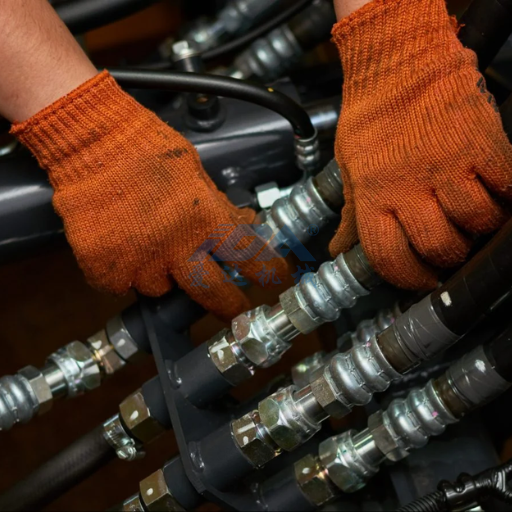
Preventative Maintenance Guidelines
Effective preventative maintenance ensures maximum operational effectiveness while decreasing equipment downtime and extending the operational life of hydraulic discharge machines. The following guidelines establish a comprehensive maintenance framework:
Essential Maintenance Procedures
1. Regular Inspection Schedule
The team will conduct inspections every two months to check for equipment damage and fluid leaks and to assess equipment operationalizing standards. The organization will use sophisticated testing methods to identify system failures at their earliest stage.
2. Fluid Quality and Replacement
You need to perform routine assessments of hydraulic fluid for testing both contamination and degradation. The maintenance crew should change fluids after 1,000 operational hours or according to the results of oil analysis testing.
3. Filter Replacement
The organization will change hydraulic filters based on the machine’s operational needs and its surrounding environmental factors. The data indicates that maintaining regular filter replacements will lead to a 30 percent increase in system operational duration.
4. Calibration of System Pressures
The organization must use accredited measurement equipment to verify that pressure settings function according to manufacturer specifications. Excessive pressure causes internal component stress which leads to accelerated equipment deterioration.
5. Lubrication of Moving Parts
All moving parts require proper lubrication through correct lubricant application which decreases friction and enhances operational efficiency. Proper lubrication reduces energy consumption by up to 15%.
6. Data-Driven Monitoring Systems
The organization will install Internet of Things sensors on machines which will monitor temperature and pressure and fluid levels. Equipment reliability improves by 25 percent through predictive maintenance which uses big data analysis.
Common Issues and Troubleshooting
Hydraulic discharge machines face multiple performance impairment issues including fluid contamination and temperature changes and mechanical component deterioration. Understanding these challenges enables proactive problem resolution.
| Common Issue | Causes | Solutions |
|---|---|---|
| System Overheating | Inadequate cooling, insufficient fluid, equipment overloading | Test cooling system, check fluid levels, examine load distribution |
| Pressure Loss | Hydraulic line leaks, broken seals, clogged filters | Inspect hoses, replace worn seals, clean/replace filters |
| Fluid Contamination | External debris, degraded seals, poor filtration | Implement filtration assessments, replace contaminated fluid |
| Component Deterioration | Wear from operation, corrosion, inadequate maintenance | Schedule preventive inspections, replace worn components |
Real-time performance tracking combined with data analysis from search patterns enables organizations to accurately predict common problems which they can then solve to maintain consistent operational performance throughout their hydraulic networks.
Best Practices for Longevity
Hydraulic systems and their components require organizations to establish a comprehensive system of active protection methods which will ensure their long-lasting operation. The system lifespan extension becomes achievable through addressing maintenance challenges and implementing predictive maintenance systems.
Longevity Enhancement Strategies
Scheduled Preventive Maintenance
The team needs to perform their scheduled inspections which require them to check hoses and fittings along with seals to find any early signs of wear. The team needs to follow the maintenance schedule which the manufacturer provides to achieve better results in equipment reliability.
Fluid Quality Management
The system requires regular filtration assessments and advanced contamination detection systems. The system needs fluid replacement based on the manufacturer’s instructions.
Real-Time Monitoring
The system requires installation of real-time monitoring sensors which will identify both pressure fluctuations and temperature variations to allow preventive measures before major problems occur.
Operator Training and Protocols
Train operators correctly to prevent operational errors. Update procedural documents to establish operation standards preventing unnecessary complications.
The Future of Hydraulic Discharge Technology

Integration of IoT for Real-Time Monitoring
Hydraulic systems benefit from Internet of Things (IoT) technology because the technology enables operators to monitor system performance in real time while using the data to improve their maintenance procedures. The system uses IoT sensors to gather continuous data about essential system metrics which include pressure and temperature and flow rate and system vibrations.
IoT Monitoring Benefits
- Continuous data gathering on pressure, temperature, flow rate, and vibrations
- Centralized analytics platforms with advanced anomaly detection algorithms
- Early identification of issues before major equipment failures
- Proactive maintenance plans based on predictive models
- Enhanced operational reliability while controlling expenses
Organizations that use current data patterns from search engines can improve their forecasting models for upcoming events. The combination of IoT telemetry data with popular hydraulic solutions enables maintenance teams to develop proactive maintenance plans that identify and resolve issues before they occur.
Emerging Trends in Hydraulic Technology
The search engine data enables complete alignment between upcoming hydraulic technology trends and actual requirements which exist in present-day industrial operations. The combination of innovation with data analysis creates opportunities for engineers to enhance hydraulic system development through market intelligence.
Eco-Friendly Hydraulic Fluids
Growing demand for biodegradable and energy-efficient fluid designs based on sustainability searches
Predictive Analytics
AI-integrated intelligent systems for preventive equipment failure prediction
IoT-Enabled Sensors
Predictive control algorithms for reduced downtime and maintenance costs
Real-time search trends provide valuable information for industry stakeholders, enabling them to create hydraulic systems which will address current market needs while establishing an ongoing development path for future hydraulic technology improvements.
Innovations to Watch in Discharge Equipment
The most important breakthrough for discharge equipment comes from developing new materials which offer extended durability and protection against chemicals. The use of high-performance polymers and composite materials has increased because these materials extend pump and valve durability while enhancing efficiency during extreme operational conditions.
Key Innovation Areas
Advanced Materials:
High-performance polymers and composites for extended durability
High-performance polymers and composites for extended durability
IoT Integration:
Accurate flow rate, pressure, and blockage monitoring
Accurate flow rate, pressure, and blockage monitoring
Energy Efficiency:
Variable frequency drives and smart power management
Variable frequency drives and smart power management
Sustainability Focus:
Environmental regulation compliance through advanced technology
Environmental regulation compliance through advanced technology
Search trends show increasing public interest in energy-efficient discharge solutions. The industry emphasizes sustainability as its main objective, which leads to advanced technology that improves discharge equipment performance through better efficiency and reliability and faster compliance with environmental regulations.
Frequently Asked Questions
What should you expect from a hydraulic discharge machine supplier?
The proper supplier must deliver both superior hydraulic discharge machine equipment and complete system specifications which include hydraulic station specifications and electric control box specifications. The company serves as either the machine producer or their connection to a manufacturer who provides all necessary documents about pressure plate components and piston rod components and cylinder components. The system provides details about safety systems which include explosion-proof features and it offers recommendations for managing high viscosity materials and sticky pastes and adhesive sealants. The suppliers will present their customers with different optional modules which include a planetary mixer and filling machine and capping machine and the complete packaging line system. The company must deliver both customer support services and replacement parts and operational training for both manual and automated batch production systems.
How do the mixer and discharge machine handle high viscosity materials?
The discharge machine requires a mixer which contains strong mixing and dispersion capabilities to handle both high viscosity materials and viscous materials and adhesive materials and paste materials. The machine uses a pressure plate together with a hydraulic lift system or a cylinder-driven piston rod system to force materials through the discharge extruder which enables smooth extrusion operations. The vacuum-assisted filling process eliminates bubbles while maintaining consistent extrusion for both sealant and adhesive applications. Electric control and electric control box settings let operators adjust speed and extrusion pressure to match viscosity and prevent clogging. Machines which have high efficiency designs together with basic equipment designs will provide operations which require minimal downtime during batch production.
Can hydraulic lift or cylinder systems improve the discharge process?
The discharge process benefits from hydraulic lift systems and cylinder systems because they provide stable high-pressure force which functions as an effective method to extrude viscous materials through discharge extruders and presses. Hydraulic stations and well-designed piston rods deliver consistent extrusion pressure, which is crucial for high viscosity sealant, paste, or adhesive applications. Hydraulic systems provide better control than pneumatic systems because they enable operators to lift heavy loads with greater force, which makes them ideal for factory and chemical machinery operations. The system uses electric control integration to achieve accurate timing and sequencing for its automatic discharge and filling machine functions. The hydraulic station requires proper maintenance together with the seals because it ensures that the system will operate at peak efficiency while delivering consistent high-quality results over an extended period.
Is an automatic hydraulic discharge machine suitable for batch production?
The automatic hydraulic discharge machine operates well in batch production processes because it enables multiple production cycles to be executed through its programmable system and its ability to quickly switch between different production runs. The combination of automation with a planetary mixer or dispersing mixing stage enables the complete blending of all ingredients before extrusion to achieve uniformity across different production runs. The electric control box together with its electric control systems provides accurate measurement of required amounts for both filling machines and subsequent packaging and capping machine operations. The combination of explosion-proof design and vacuum capabilities together with chemical machinery that handles adhesives or sealants creates a safer operational environment while maintaining product quality. Numerous manufacturers and suppliers offer equipment solutions that allow users to operate systems effortlessly while they monitor production progress and connect their equipment with factory operations to achieve optimal production efficiency.
What function do vacuum systems and extrusion processes serve in the operation of hydraulic discharge extruders?
The extrusion process uses vacuum technology to remove air from the mixed compound because this step prevents air bubbles from forming in the final product during the curing process of viscous adhesives and pastes. A hydraulic discharge extruder operates through a hydraulic cylinder or pressure plate to generate controlled pressure, which pushes material through a nozzle for precise filling and bead placement operations. The electric control system manages vacuum operations together with mixer speed and hydraulic station pressure to achieve optimal dispersion and extrusion results. The application of vacuum technology enhances the ability of materials to stick together while packaging and sealing materials through filling and capping machines used in downstream processes. The integrated system enables operators to manage operations easily while maintaining high-quality production standards, which also applies to handling difficult materials that have high viscosity and stickiness.
What maintenance does the machine manufacturer recommend for the piston rod and press plate on the machine?
Manufacturers recommend that equipment operators need to conduct regular inspections and lubrication work on piston rods and cylinder seals and press plates to stop equipment wear and maintain normal operation at heavy load conditions. The hydraulic station requires users to inspect hydraulic oil levels and system filtration while they need to replace or service any parts that show signs of corrosion or pitting to protect their adhesive and chemical machinery batches from contamination. The functioning of electric control box components together with safety interlocks and explosion-proof elements needs to undergo testing according to specified intervals. The facility requires cleaning of its discharge extruder and mixing chambers to eliminate any buildup of viscous paste or sealant, which would block extrusion and packaging processes. The maintenance log requires all maintenance activities to be documented, while original spare parts from the supplier need to be used to ensure the system operates at maximum efficiency for an extended period.
Reference Sources
- Improving the Technical Level of Hydraulic Machines, Hydraulic Units, and Hydraulic Devices Using a Definitive Assessment Criterion at the Design Stage – Sumy State University Repository Methodology for assessing the technical level of hydraulic machines during design.
- Experimental Study of Hydraulic Equipment Operation Process – E3S Web of Conferences Experimental research examining forces acting on hydraulic systems in multipurpose machines.
- Advantages of Using Hydraulic Equipment of Modular Mounting in the Modernization of Machine Hydrosystems – Kharkiv Polytechnic Institute Journal Benefits of modular hydraulic equipment in modernizing machine hydraulic systems.
- Hydraulic Discharge Machine